
Cervical cancer continues to be one of the leading yet most preventable causes of cancer-related deaths among women worldwide. More than 95% of the 660,000 cervical cancer cases reported globally every year are caused by the human papillomavirus (HPV). Despite the availability of effective vaccines, every two minutes a woman dies from this disease, and 90% of these deaths occur in low-and middle-income countries. The burden is especially severe in Africa, where 19 of the 20 countries hardest hit by cervical cancer are located.
Although HPV vaccination has proven to be highly effective, global vaccine supply shortage since 2018 have slowed the introduction and scale up of HPV vaccination programs. These challenges were further intensified in early 2024 when production issues at Africa and Asia were at risk of missing timely protection against HPV, highlighting the urgent need for more flexible and efficient vaccination strategies.
WHO’s Vision: Reaching 90% of Girls by Age 15
The World Health Organization (WHO) has made HPV vaccination a central pillar of its Global Strategy for Cervical Cancer Elimination. The first and most critical target of this strategy is to ensure that 90% of girls are fully vaccinated with the HPV vaccine by the age of 15. According to Dr. Kate O’Brien, Director of the Department of Immunization, Vaccines and Biologicals at WHO, overcoming supply limitations is essential to achieving this goal. She emphasized that the availability of single dose vaccine options gives countries greater flexibility and choice, enabling them to protect more girls even in resource constrained settings.
Shift Toward Single-Dose HPV Vaccination
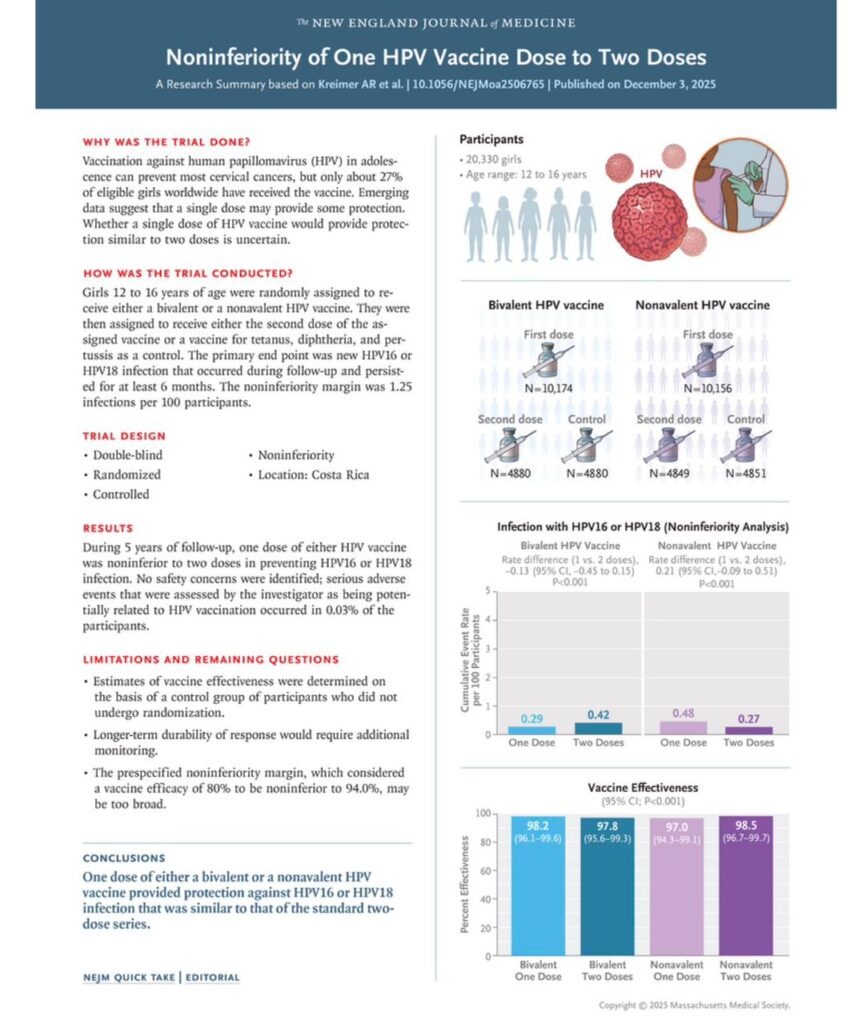
Recent scientific evidence has shown that a single dose of the HPV vaccine can provide strong and durable protection, particularly in younger age groups. As a result, a growing number of HPV vaccine products initially approved for two dose schedules are now recommended for single dose-use. One such vaccine, Cecolin®, has been incorporated into the second edition of WHO’S technical guidance of HPV vaccine product choice.
While some of these users are not yet reflected on product labels, WHO and public health advisory bodies support off-label use when robust data demonstrates safety, effectiveness, and clear public health benefit. This approach allows countries to act quickly and responsibly to protect more girls without waiting for lengthy regulatory updates.
Measurable Global Progress
The impact of adopting the single dose schedule is already evident. Global data released on 15 July 2024 shows that one dose HPV vaccine coverage among girls aged 9-14 years increased from 20% in 2022 to 27% in 2023, 37 countries were implementing a single dose schedule. By 10 September 2024, this number had risen to 57 countries, reflecting growing global confidence in this approach.
WHO estimates that at least 6 million additional girls were reached with HPV vaccines in 2023 alone due to the adoption of the single dose schedule – an extraordinary achievement in a single year.
Current WHO-Recommended HPV Vaccination Schedules
To support wider and faster coverage, WHO now recommends the following HPV vaccination schedules:
- Girls aged 9-14 years: One or two doses
- Girls and women aged 15-20 years: One or two doses.
- Women older than 21 years: Two doses with a 6-month interval
These updated recommendations simplify delivery, reduce costs, and make national immunization programs more resilient in the face of supply constraints.
A Turning Point in Cervical Cancer Prevention
The shift toward single dose HPV vaccination represents a significant milestone in global public health. By expanding vaccine options, improving access and reaching millions more girls, the world is moving closer to eliminating cervical cancer as a public health threat. With sustained commitment, evidence-based policies and equitable vaccine distribution, the goal of protecting every girl from HPV -and preventing countless deaths -has never been more achievable.
Conclusion: Accelerating the Path to Cervical Cancer Elimination
The adoption of the single dose HPV vaccination strategy makes a powerful and timely advancement in the global fight against cervical cancer. At a moment when vaccine supply constraints threaten progress, this evidence-based approach enables countries- especially those in low- and middle-income regions-to protect more girls, faster and more efficiently. The rapid increase in country adoption and the millions of additional girls reached in just one year clearly demonstrate the impact of this shift.
By prioritizing flexible dosing schedules and expanding vaccine options. WHO’s recommendations bring the world closer to achieving the ambitious goal of 90% HPV Vaccination coverage among girls by age 15. If sustained and scaled, these efforts can significantly reduce cervical cancer incidence and mortality, particularly in the countries that bear the heaviest burden. The single dose strategy is not just a solution to supply challenges -it’s a critical catalyst for equity, prevention and the eventual elimination of cervical cancer as a public health problem.